
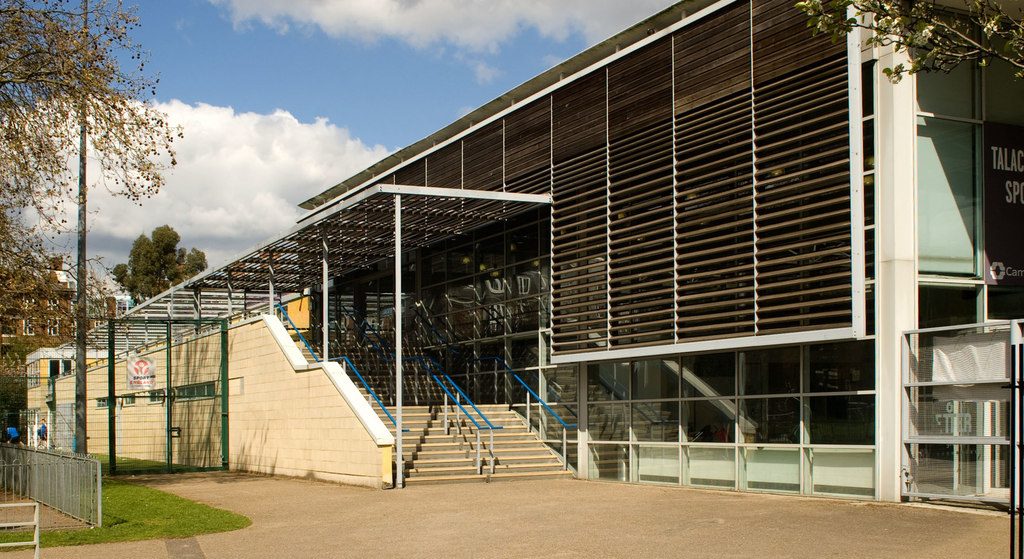
Talacre Community Sports Centre in Kentish Town, North London, has a seven-a-side 3G football pitch, a sports hall, soft play and studios for yoga and Pilates.6 Since 2023 it has also had something less obvious: a roof covered in solar panels that were paid for, and are owned, by local people.
It is a small project, but it answers a question many of us have asked while looking at a flat roof: could this make electricity, and who would pay for it? Here is how it works, what it cost, and what each unit of electricity is likely to cost.
Who paid for it?
The centre is run by a charitable leisure company, Greenwich Leisure Limited, on behalf of Camden Council.2 The panels belong to Power Up North London (PUNL), a volunteer-run community benefit society set up in July 2015.1 To fund the project, PUNL sold community shares, which means local people lent it money. It aimed for £80,000 (about €96,000) and, according to its chair, quoted in Camden Council’s newsroom, raised it in just over a month, half the time it had allowed.2 The campaign page shows a final total of £83,500 (about €100,200), marked successful on 3 March 2023.3
The deal is simple. PUNL sells the solar electricity to the centre at an opening price 15% below the price the centre was paying when generation started, reset each year. Investors are offered a projected average of 4% interest a year, which is not guaranteed, and their capital is paid back at 5% a year over 20 years.1 The result is over 200 panels, including 32 recycled from an earlier council project.2
How much electricity should it make?
The array is rated at 83 kilowatts peak (kWp), the most the panels can produce in perfect sunshine. PUNL forecast that it would generate 68 megawatt-hours (MWh) a year. One MWh is 1,000 kilowatt-hours, the units on an electricity bill. That is a little over a third of the 185 MWh the centre uses each year. PUNL expected about 90% to be used on the spot and forecast a saving of 12 tonnes of carbon dioxide a year.1
These are forecasts made before the panels went in. Camden Council reported on 29 June 2023 that the work had recently completed,2 but no published figures for what the panels have actually generated were found.
What does each unit cost?
PUNL has not published a cost per unit, so the figures below are derived from its own forecasts.1 The sums use these numbers:
- The money raised: £83,500 (about €100,200).
- Running costs forecast by PUNL over 20 years (maintenance £6,239, metering and monitoring £5,079, and replacing the inverter, the box that converts the panels’ output into usable electricity, £19,818): £31,136 (about €37,400). This leaves out the one-off set-up cost and the accounting charge for depreciation.
- Electricity over 20 years: 1,360 MWh, which is PUNL’s forecast of 68 MWh a year held for 20 years. The prospectus gives no rate for panel ageing, so none is applied, and the true total would be a little lower.
- Interest forecast for investors over 20 years: £32,275 (about €38,700).
The up-front cost equates to about 6.1p per kilowatt-hour (about €0.07). Adding running costs, it equates to about 8.4p (about €0.10). Including the interest paid to investors, it equates to about 10.8p (about €0.13).
For comparison, PUNL’s model forecasts £10,835 of sales to the centre in 2024. Divided by the roughly 61,200 kilowatt-hours expected to be used on site (90% of 68 MWh), that equates to about 17.7p per kilowatt-hour (about €0.21). Euro figures use €1.20 to the pound (X-Rates, 14 November 2026), and they change daily.
Is that good value?
It is cheaper than the price PUNL forecasts the centre will pay, but not as cheap as a big solar farm. Research for the UK government’s energy department put the central cost of large solar plants (over 5 megawatts) at about £659 per kWp (about €791) and about £46 per MWh to generate, or 4.6p per kilowatt-hour (about €0.06).4 Talacre’s cost equates to about £1,006 per kWp (about €1,210), roughly 50% more, based on the £83,500 raised and its 83 kWp.
The same research assumes a solar plant produces about 1,070 kilowatt-hours per kWp a year, a 12.2% load factor.4 PUNL’s forecast for Talacre is about 820. The two are different kinds of project, so the comparison is a guide, not a ruling.
Why the financing matters
The panels are standard; the clever part is who pays and who benefits. Researchers writing in the journal Energy Policy point out that the UK government’s withdrawal of the Feed-in Tariff, a payment scheme for small renewable generators, left community-owned solar projects facing serious financial challenges.5 They propose that such projects sell their electricity to local buildings under power purchase agreements, and test whether adding batteries would help.5 Talacre uses the first part of that idea. PUNL evaluated a battery and rejected it.1
The fine points about figures, and the big picture
Every figure above for output, income and cost is a forecast by PUNL, made before the panels went in. PUNL’s model also assumes energy prices rise by 2.5% a year, and its prospectus warns that community shares are fully at risk and investors could lose some or all of their money.1
Even so, Talacre shows that a community can pay for solar on a well-used public building, sell the power at a discount to the people inside, and pay its investors a modest return, all without a government subsidy for each unit generated. PUNL described it as its tenth and largest project.2 If your local sports hall, library or school has a sunny roof, someone in your area may already be asking the same question.
Sources
- Talacre Community Sports Centre share offer prospectus, Power Up North London, 2022-12-23
- Camden community partnership helping to reduce CO2 emissions, Camden Council Newsroom, 2023-06-29
- Community Solar @ Talacre Community Sports Centre, Crowdfunder, 2023-03-03
- Onshore wind and solar cost and technical assumptions, Department for Energy Security and Net Zero (research by Arup), 2025-10-06
- An innovative viable model for community-owned solar PV projects without FIT: comprehensive techno-economic assessment, Energy Policy, 2020-09-06
- Talacre Community Sports Centre, Better (Greenwich Leisure Limited), date not stated

