
While many governments talk of their aims to reduce greenhouse gas emissions, Denmark is walking the walk, the cycle, the bus or train journey – any alternative to flying. The Danish government announced today a tax will be phased in from 2025 on short-haul flights departing from Denmark at DKK30 (£3.50 or €4), rising to DKK50 (£5.80 or €6.70) in 2030.
For air travel beyond Europe, the 2030 tax will be DKK310 (£36 or €41.60) for medium-distance flights, and DKK410 (£48.64 or €55) for long-distance flights.
“The transport sector is currently undertaking a rapid green transition, and with this agreement, this also concerns aviation. It will still be possible to fly, but it must be possible to do this in an environmentally-friendly way.”
Danish Transport Minister Thomas Danielsen
The Danish government expects to seen as a leader to EU states.
“Flying takes a toll on the climate, which is why we need to equip our flight sector with green wings… I imagine that as the years go by we shall have common European regulation in this area. That would be the right way forward.”
Danish Climate and Energy Minister Lars Aagaard
But the tax doesn’t make flying environmentally-friendly. Denmark plans to use the taxation to fund the green transport transition, and seems to be in line with the Danish Prime Minister’s announcement at the start of the year to make flying green, with sustainable aviation fuel, which can be produced from ethanol, solar power, cooking oil and even food waste.
France proffered more specific plans this Summer to use aviation tax to invest €100M (£87M) in railways. France had already introduced an airline tax in 2005, and increased it in 2020 to €3 (£2.60) for standard class and €18 (£15.60) for first/business class. This is on top of the French government’s bold ban on flights of under 2.5 hours where rail travel is an option. They are also pursuing a tax on private jets.
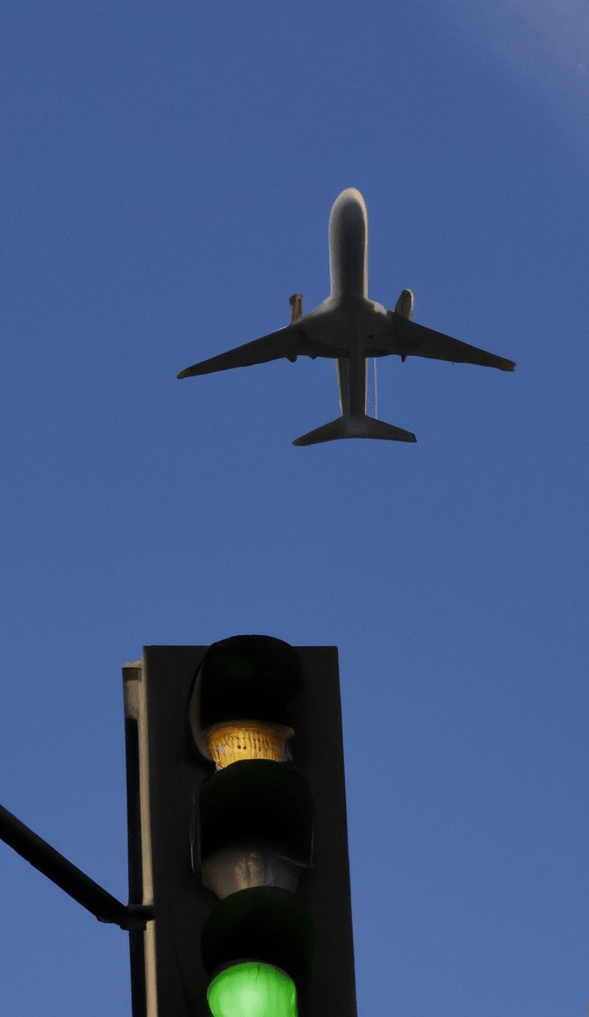
2023 thus far has been a tale of two flight tax policies. The UK government halved flight tax for the tax year that started in April, to £6.50 (€7.50) for domestic flights, and £91 (€105) for long-haul flights; the highest of four bands. The UK Prime Minister appeared justify this counter-intuitive move – although nearly two years since announcing halving flight taxes – by pledging to stop the (non-existent) “heavy-handed measures…to reach Net Zero”.
EU countries’ initiatives – even if ignored – still lead the way, while the UK Conservative government appears to have put itself in reverse.
Now Read
Governments aim for Zero Carbon Emissions by 2050 (October 2022)
Sources
Denmark to introduce green tax on plane tickets, Zawya / Agence France-Presse (AFP), 2023-12-15
Denmark introduces green tax on air passengers from 2025, Reuters, 2023-12-15
France is raising taxes on flights to pay for trains: Should other European countries do the same?, Euronews, 2023-08-10
Forbes, 2023
Transports : Clément Beaune annonce “renforcer” la taxe sur les billets d’avion en 2024 pour “financer les investissements dans le train”, Franceinfo, 2023-08-07
Air Passenger Duty: banding reforms and rates from 1 April 2023 to 31 March 2024, UK Government, 2022-07-20
Green campaigners hit out at Sunak’s tax cut on domestic flights, FT, 2021-10-27
No Rishi, there aren’t any ‘new taxes to discourage flying’ – if only there were, The Independent, 2023-09-21
 Boˆreal