
As solar energy is increasingly discussed, people continuously say that the sun isn’t always shining to listeners too polite to note that mankind is now advanced enough to know when the sun will rise and set every day, in every country, and this will remain the same every year. But what about cloudy skies? Don’t solar panels need to be aligned to direct sunlight? No. They are flat. Perhaps people confuse them with telescopes, which are used to gather light from any of the octillions of other stars. The sun is exceptional. It’s exceptionally good to us.
So having exhausted that angle, how about the more positive side: While our predictable, constant Sun will provide energy every day, what about when nobody under those solar panels is using electricity?
This is one value of batteries. They store energy that solar panels produce in the middle of day for the rest of the afternoon and evening. While this stored energy lasts, there’s no need to return to relying on the grid.7 Battery technology is changing quickly, and the choices made now decide how much a system costs, how it copes with a northern winter and what rules apply to it.
The battery most likely to be offered today
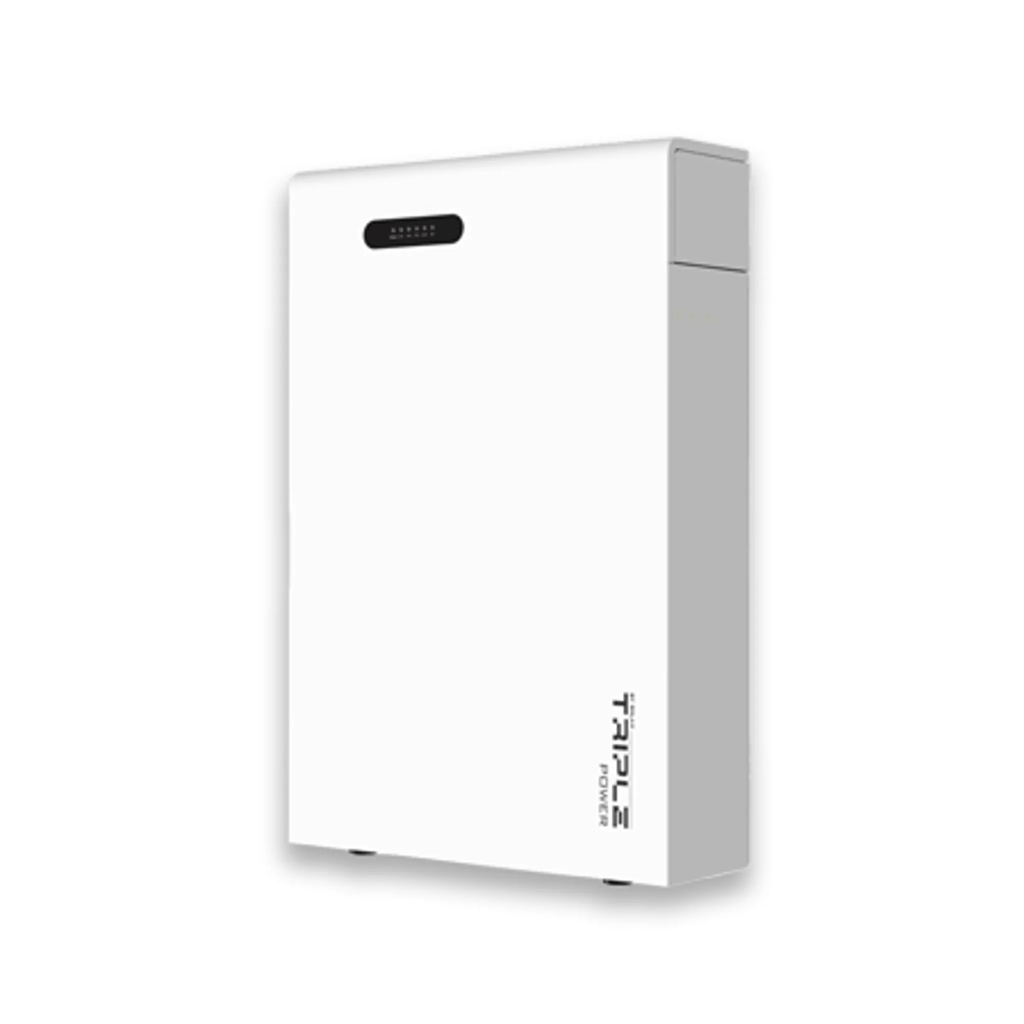
Most batteries now installed to store electricity are a type called Lithium-iron Phosphate, usually shortened to LFP. Unlike some other lithium-ion types, it contains no cobalt.1 According to the International Energy Agency (IEA), LFP made up over 90% of global stationary battery storage installations in 2025.1
Prices have fallen sharply. The IEA reports that the average price of battery energy storage systems in 2025 was one-third of its 2020 level, and that installations have grown more than twenty-fold in storage capacity over five years.2
The price trend is not guaranteed to continue. Lithium prices at the start of 2026 were more than twice their level a year earlier, though still around 70% below the 2022 peak, and the IEA warns that sustained increases could push battery prices up.1 The IEA also reports that China made well over 80% of all batteries in 2025, and that nearly all batteries used for power grids rely on China for at least one step of their supply chain.2
The newcomer: sodium-ion
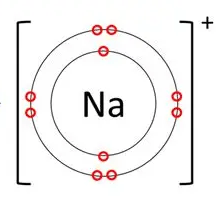
Sodium-ion batteries work in a similar way to lithium-ion batteries, but use sodium, the metal in table salt, instead of lithium. The IEA described 2026 as a year that could prove pivotal for the technology, but its February 2026 analysis is clear that it is still very small: sodium-ion production in 2025 was less than 1% of lithium-ion production.3
The IEA sets out the trade-offs plainly:
- Price: current lithium prices are “not yet high enough for sodium-ion batteries to undercut LFP costs in most applications”.3
- Weight: the latest sodium-ion cells reach up to around 175 watt-hours per kilogram, against up to 205 for LFP, so a sodium-ion battery storing the same energy is heavier.3
- Cold weather: the latest cells can keep around 90% of their rated capacity at temperatures as low as -40 °C, and perform significantly better in the cold than lithium-ion, particularly LFP.3
- Supply: China accounts for more than 95% of installed and announced sodium-ion capacity for 2030, and the supply chain is far less developed than for lithium-ion.3
The IEA concludes that sodium-ion is already cost-effective for stationary storage in particularly cold climates.3 That is the case the IEA singles out, and it is relevant to buildings in the north. No sodium-ion battery sized for a school or church hall has been confirmed in the sources reviewed for this article, so it should be treated as a technology to watch rather than one to order.
Built for cold winters
A review of energy storage for cold regions, published in the journal Energies in February 2022, reports that low temperatures reduce the storage capacity of batteries and slow the chemical reactions inside them.4 Its authors compared storage options in conditions in Canada’s North.4 For a building in a cold region, questions worth putting to an installer include where the battery will be housed, how it behaves in a hard winter, and what capacity is guaranteed at low temperatures.
A British school that uses them
Manchester Communication Academy, run by the Greater Manchester Academies Trust, added solar panels and battery storage as part of a wider project funded through Phase 3b of the Public Sector Decarbonisation Scheme. The project also replaced two boilers, nearly 20 years old, with an air source heat pump, and added loft insulation.5 All of this technology went live on 11 July 2024.5
The figures published by Salix, the government’s delivery body for the scheme, cover the whole project and are estimates rather than measured results:5
- Project value: £1.5 million (€1.80 million), with a grant of £1.32 million (€1.58 million).5
- Estimated annual savings: £46,610 (€55,932) and 193 tonnes of carbon dioxide equivalent.5
- Reported result: the school is “now operating for 25% of its opening hours on energy generated and stored at its facilities”.6
Salix reports that the academy understands it is one of the first schools in the country to put battery storage alongside a solar array, and that the project had to wait for approval from its local network operator before it could make full use of the solar panels and battery.6 A custom part for the project took the best part of nine months to be manufactured in Italy, according to the school’s chief operating officer.5

Budget, rules and steps for a community building
Funding: Salix states that applicants to the public sector grant scheme can apply for battery storage only alongside a low-carbon heating measure in each building proposed, and are typically not permitted to export electricity to the grid. Salix also advises that an appraisal should explore the benefits and limitations of storage, and that design, space and planning requirements must be considered early.7
Grid approval: The Welsh Government’s technical note states that network operators must authorise all installations of generating stations and battery storage systems. It lists a prior G99 application for installations above 3.68 kilowatts (single phase) or 11.04 kilowatts (three phase), where the capacity counted is the generation plus the battery storage.8 The same note warns that a new or changed grid connection may not be available immediately and may carry a cost.8 The Manchester project’s wait for approval shows the delay can be real.6
Fire safety. The National Fire Chiefs Council’s planning guidance applies to open-air lithium battery systems of one megawatt-hour or more, far larger than a school system.10 The government’s health and safety guidance for grid-scale storage notes that detailed guidance has been developed for domestic and small-scale commercial systems.9 A community group should ask the installer which guidance and standards the system follows, and consider asking the local fire and rescue service for advice at an early stage.
Keeping to budget. The sources reviewed give no reliable cost per kilowatt-hour for batteries on community buildings, so any figure quoted should come from written quotes. Useful steps are:
- Check when the building uses electricity, because a battery only helps with solar power generated at times when the building is not using it.
- Ask for quotes for the solar panels with and without a battery, so the battery’s cost and savings can be judged separately.
- Ask the installer to confirm the battery chemistry, its guaranteed capacity in winter temperatures, and where it will be housed.
- Contact the local network operator early, because approval can hold up a project.6
- Check grant rules before committing, including whether a heating measure must come with the battery.7
Click here to read how Denmark advanced Sodium battery technology.
Sources
- Electric vehicle batteries, Global EV Outlook 2026, International Energy Agency, 2026 (day not stated)
- Global battery markets are growing strongly, and so are the supply risks, International Energy Agency, 2026 (day not stated)
- Sodium-ion battery momentum grows, but challenges remain, International Energy Agency, 2026-02-17
- Electrochemical Cells and Storage Technologies to Increase Renewable Energy Share in Cold Climate Conditions: A Critical Assessment, Energies (Ahoutou, Ilinca and Issa), 2022-02 (day not stated)
- Patience and perseverance propel positive outcomes in Manchester, Salix Finance, 2024-10-22
- Sustainability project saves school thousands and improves learning spaces for hundreds of students, Salix Finance, 2024-10-22
- Public sector decarbonisation: the role of energy storage, Salix Finance (first published in Energy Manager Magazine, June 2025), 2025-07-03
- Connecting on-site generation to the grid: technical note, Welsh Government, date not stated
- Health and safety in grid scale electrical energy storage systems, Department for Energy Security and Net Zero, 2024-04-18
- Grid scale energy storage system planning: guidance for fire and rescue services, National Fire Chiefs Council, date not stated
Euro figures use £1 = €1.20 (X-Rates, 14 November 2026), and exchange rates change daily. Battery prices and lithium prices change often, and the IEA figures above describe 2025 and early 2026. The Manchester figures are estimates for a whole project, not measured battery results. No source reviewed gave measured winter performance for a battery in a UK, Nordic or Canadian community building. These gaps are noted.

