
Germany’s energy revolution is well underway — and it’s not just a national triumph, but a case study the rest of the world can learn from. Known as the Energiewende, this multi-decade shift away from fossil fuels towards renewable energy has been marked by thoughtful legislation, persistent public support, and a remarkable fusion of innovation and policy.
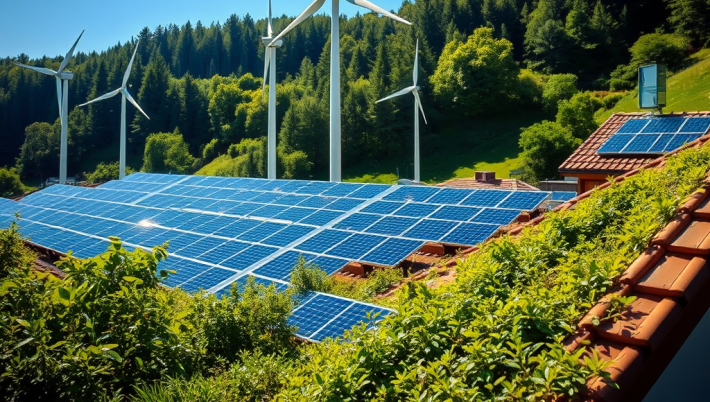
An Important Example
Germany is targeting 80% renewable electricity by 2030. That’s not just ambitious — it’s transformative. From the outset, this transition has aimed to reduce emissions, eliminate nuclear energy, and decarbonise one of the world’s most advanced industrial economies. The success of the Energiewende holds critical insights for any country trying to navigate its own path to clean energy.
A Legal Backbone: From Feed-In Tariffs to Auctions
The story began with the 1991 Electricity Feed Act, which guaranteed payments to small producers of renewable electricity. This was revolutionary at the time, ensuring a stable return for investments in wind, solar, and bioenergy. It later evolved into the Renewable Energy Sources Act (EEG) in 2000, setting even clearer targets and mechanisms.
Over time, the model evolved. Feed-in tariffs gave way to market-based auctions, but the principle remained the same: support innovation and reward clean energy generation. By 2021, new updates to the EEG included expanded targets — 200 GW solar, 100 GW onshore wind, and 30 GW offshore wind by 2030. Even green hydrogen got a boost, with incentives to power its production using clean electricity.
Real-World Lessons from the South
What sets this paper apart is its close look at actual projects in the Saarland region. Through case studies, it becomes clear that policy alone isn’t enough. From rooftop solar on kindergartens to large-scale wind farms, developers faced delays due to red tape, historic site protections, and even WWII-era bomb discoveries. In every case, persistence and smart policymaking allowed the projects to succeed.
One striking example involved a PV system blocked by funding laws that limited municipal borrowing. A change in legislation reclassified solar as an energy-saving measure, exempting it from those debt restrictions — a simple but powerful policy fix.
The Takeaway for Other Nations
Germany’s approach has been far from perfect, but it has been resilient, transparent, and adaptable. Its success owes much to consistent legal reform, financial stability for green energy investors, and public engagement — including citizen-owned cooperatives that democratise the energy sector.
For other countries, the lesson is clear: legal certainty, community participation, and flexible infrastructure planning are just as crucial as technology.
Germany’s Energiewende didn’t happen overnight. But as the country eyes an 80% renewable electricity target by 2030, it proves that a clean energy future isn’t just idealistic — it’s entirely achievable with the right mix of policy, perseverance, and local action.
Source
The German Energy Transition Towards Renewable Energy Sources: Theoretical and Practical Perspectives, Economic Alternatives, Issue 1, 2025, 2025-03-31
 Boˆreal
Ya wohl
Energy source in Europe large cities and Projection of climate change in the Atlantic region. According to NOAA ( National Oceanic, Atmospheric Administration), and POW weather Forcast, a neutral ENSO will affect Atlantic region, and how long it will last. Energy source and annual precipitation is important. Because, the show must go on.
LikeLike