
Nuclear energy is often seen as both a blessing and a burden. It provides vast amounts of low-carbon electricity, yet leaves behind radioactive waste that must be handled with extreme care. A new study from researchers at the University of Chinese Academy of Sciences [39.9°N, 116.2°E] offers a major step forward in making nuclear energy cleaner and safer — using clever electrochemistry to remove one of the most problematic radioactive elements from waste water.
The problem: long-lived radioactive strontium
When uranium is split in nuclear reactors, one of the by-products is strontium-90, a radioactive isotope that behaves like calcium and can accumulate in bones if released into the environment. It’s soluble, mobile and dangerous — and existing clean-up methods struggle to remove it efficiently, especially from acidic waste.
The breakthrough: an electrochemical “sponge”
The team developed a material based on a layered titanate perovskite, a mineral structure that can act like a sponge for metal ions. But instead of relying on simple chemical absorption, the researchers added a sustainable twist: they used electrochemically switched ion exchange (ESIX) — a process where applying a small electrical voltage makes the material actively pull in or release strontium ions.
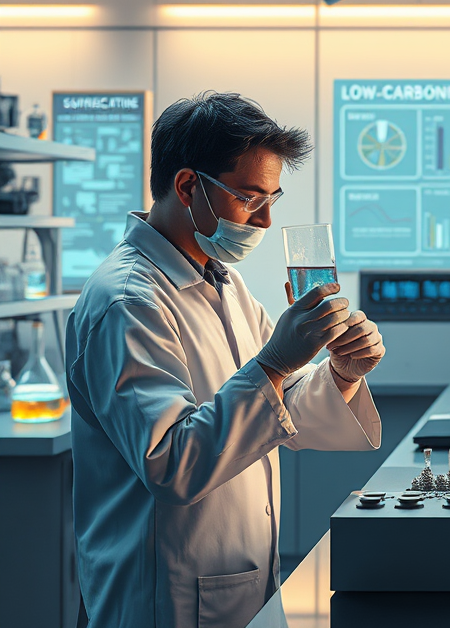
This control not only makes the clean-up process faster and more complete, it also avoids producing secondary chemical waste. The system captured over 99% of strontium from real nuclear waste samples and maintained its performance even under strong acid and high radiation — key conditions in real-world applications.
Why it matters for green energy
The innovation helps tackle one of the biggest barriers to public acceptance and sustainability of nuclear power — waste management. A cleaner, more efficient way to handle radioactive by-products could make nuclear energy a more viable partner to renewables, supplying consistent low-carbon power while wind and solar fluctuate.
Equally important, the method itself is electrochemical, meaning it can be powered by renewable electricity. In principle, future waste treatment systems could run entirely on green energy, turning one of the dirtiest aspects of the nuclear cycle into something close to circular and sustainable.
A safer foundation for a clean-energy mix
By combining advanced materials science with electrochemistry, this research points to a future where nuclear and renewables can genuinely complement each other — safe, stable, and sustainable. It’s a reminder that achieving net zero isn’t just about generating clean power, but also cleaning up the technologies we already rely on.
Source
Enhancing radiostrontium uptake by a layered titanate perovskite via sustainable electrochemically switched ion exchange, Nature Comm., 2025-10-27
 Boˆreal