
Today, every tide presents the surface of a much larger story of new and unsettling travellers: microplastics.
A new study from researchers across Europe has traced how tiny plastic fragments, invisible to the naked eye, are not only widespread in the Atlantic and Arctic Oceans but are being moved, concentrated, and trapped by the same forces that shape our planet’s climate — the ocean currents.
The Ocean’s Plastic Conveyor Belt
Microplastics — particles smaller than five millimetres — come from a range of sources, including clothing fibres, packaging, and paint flakes. But while we often imagine them floating idly at sea, this study reveals that their movements follow the invisible highways of the ocean.
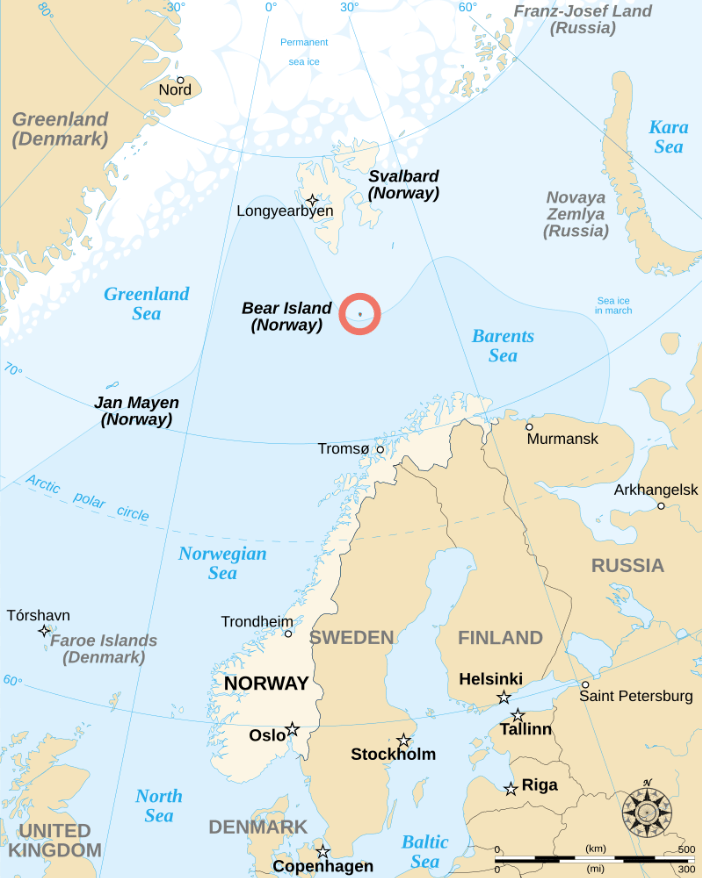
Sampling waters from Norway to the Arctic’s Bear Island (Bjørnøya), the researchers found concentrations as high as 491 particles per cubic metre. The culprits? A mix of human activity and natural ocean physics.
One of the most striking findings was that the Polar Front — where warm Atlantic water meets colder Arctic water — acts like a plastic trap. The turbulence and “eddies” (swirling circular currents) in this zone collect and concentrate microplastics, creating hidden hotspots of pollution even in remote Arctic waters.
Greywater: The Unseen Polluter
Perhaps most surprising is the role of greywater — wastewater from showers, sinks, and laundries aboard ships, especially cruise liners. While many countries treat their sewage before it enters the sea, greywater is often dumped untreated.
The study estimates that a single cruise ship can release up to 136 million microplastic particles every day through greywater alone. Multiply that by the hundreds of cruise ships that ply the Norwegian coast, and you get billions of microplastics released annually — much of it polyester fibres from washing synthetic clothing.
Wastewater on Land Still Matters
Land-based sources are no less troubling. Although modern wastewater plants remove up to 99% of microplastics, that final 1% still adds up — and many smaller Norwegian communities continue to release untreated wastewater directly into the sea. Even those that treat it are contributing to the steady flow of synthetic fibres and fragments that currents then carry northward.
In fact, the Norwegian Atlantic Slope Current acts as a conveyor belt for this pollution, transporting it from populated coasts towards the Arctic, where it can become trapped and concentrated.
The Shape of Pollution to Come
The researchers used continuous sampling — taking measurements while the ship was moving — and found much higher concentrations than earlier studies that sampled at single, fixed points. This suggests that previous research may have underestimated the true scale of marine microplastic pollution.
They also discovered that most of the particles are extremely small — under 100 micrometres, thinner than a human hair. Such fine fragments are easily ingested by plankton and fish, meaning they can move quickly up the food chain.
What It Means for a Sustainable Future
This study reminds us that sustainability is not only about reducing visible waste but also about rethinking the systems that invisibly disperse pollution. Cruise ships, wastewater management, and even the way we wash our clothes all play a role in feeding a global tide of microplastics.
And while ocean currents help regulate our climate, they now also redistribute our waste — carrying traces of human life into the planet’s most isolated waters.
It’s a sobering thought: even the Arctic, once imagined as pristine and untouched, is connected by the same currents that flow past our cities, our drains, and our laundry machines.
The solution, as always, starts upstream — with consumers.
Now Read
Microplastics’ Threat to Northern Marine Life
Source
Anthropogenic sources and oceanographic dynamics control the microplastic distribution in the Atlantic Ocean, Communications Earth and Environment, 2025-10-23
 Boˆreal