
In the global race to decarbonise our energy systems, solar and wind have taken centre stage. And now, appearing on the horizon, is an underexplored, low-cost way to harness solar energy that rely on panels or turbines, but only hot air.
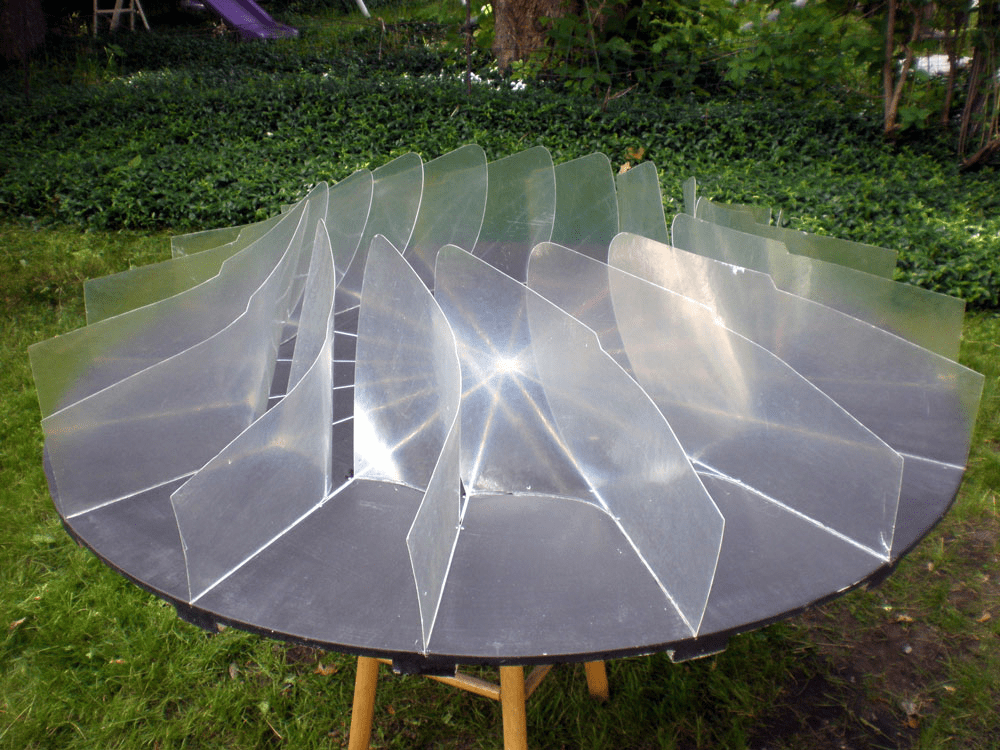
The solar vortex engine (SVE) is a technology still in its adolescence, but one that could become particularly valuable in the very regions where traditional renewables face the greatest challenges: hot, dry, sparsely populated places with plenty of sunlight but limited infrastructure. According to a new review of the technology, the SVE might just offer a sustainable, scalable way to unlock energy from rising heat itself.
Turning Heat Into Rotation
The principle behind the solar vortex engine is beautifully simple: it uses solar-heated air near the ground to generate a spinning column of rising air — essentially creating a controlled dust devil. This rotating thermal column drives turbines, which in turn generate electricity.
What’s striking is the elegance of the setup. A circular wall encloses a space where the ground (or an absorber plate) is heated by the sun. The hot air rises, and because the walls are asymmetrically shaped or contain guide vanes, the rising air starts to rotate. This rotation powers a low-height vertical turbine placed at the base of the column.
There are no photovoltaic cells, no heliostats, and no heavy moving components exposed to the elements. That’s a refreshing change, especially for regions where maintaining delicate technology is impractical.
Low-Tech, High Potential
Why does this matter? The review outlines how the SVE could thrive in low-resource settings: it’s passive, requires no fuel, and operates even after sunset thanks to retained ground heat. And importantly, it doesn’t depend on rare materials like neodymium (used in wind turbine magnets) or silicon (essential to most solar panels).
This positions the SVE as a potential fit for off-grid applications, such as rural electrification or powering irrigation pumps in arid agricultural regions. It could also pair well with desalination systems or even data centres looking for renewable cooling and energy input.
What’s New Here?
While the basic idea of harnessing convective air for power has been explored before — most notably in solar updraft towers — the review brings together recent findings to show how SVEs differ and why they might work better in some conditions.
Key insights include:
- Scalability at Small and Medium Sizes: Unlike solar towers, which must be hundreds of metres tall to be effective, SVEs can operate at heights under 15 metres, making them cheaper and more practical to build in remote settings.
- Low-Cost Construction Materials: The engine can be built from locally sourced materials like corrugated metal and simple piping, lowering the bar for deployment in developing countries.
- Thermal Storage Synergy: Because the system relies on temperature differentials rather than sunlight itself, it can integrate with thermal storage approaches, allowing electricity generation to continue into the night.
One particularly promising idea involves coupling the SVE with solar thermal collectors to intensify heat inputs during cloudy periods, improving reliability.
The Road Ahead
Of course, no technology is without its hurdles. The review notes several outstanding challenges: improving the mechanical efficiency of the turbines, refining computational fluid dynamics models to optimise design, and conducting real-world trials at scale. Right now, most experimental data comes from small prototypes, and the aerodynamic performance of these systems remains poorly understood.
However, there’s growing recognition that low-tech, decentralised solutions must play a role in the energy transition—particularly for the billions of people still living without reliable electricity.
The solar vortex engine won’t replace solar panels or wind turbines, but it might fill a gap they can’t. In an era when we must harness every sustainable watt we can get, even a whirlwind of hot air deserves serious attention.
Source
Solar Vortex Engine for Renewable Energy Harvesting in Arid Regions: A Review, Sustainable Energy Technologies and Assessments, 2025-06-27
 Boˆreal