
Norway, with its vast coastline and strong wind resources, is poised to be a wind power leader. However, deploying offshore wind farms involves complex decision-making, balancing technical, environmental, social, and economic factors.

A recent study from the Norwegian University of Science and Technology [61.7°N, 3.4°W] highlights innovative approaches to optimising offshore wind development in Norway using advanced multi-criteria decision analysis (MCDA) methods.
A New Era of Decision-Making
Traditional decision-making tools often fall short when dealing with the diverse and competing interests involved in offshore wind projects. The study underscores the use of MCDA as a structured and transparent method that integrates multiple factors into the decision-making process. This approach considers economic feasibility, environmental impact, stakeholder preferences, and technical challenges, ensuring well-rounded project evaluations.

One of the most innovative aspects of this study is the application of Multi-Attribute Value Theory (MAVT) within MCDA. MAVT allows for a holistic assessment of offshore wind alternatives by converting diverse criteria into a single numerical value. By integrating qualitative and quantitative data, it provides a clear framework for ranking different wind energy projects based on stakeholder priorities.
Advancing Beyond Conventional Methods
While the Analytical Hierarchy Process (AHP) has been widely used in renewable energy planning, the study acknowledges its limitations, such as difficulties in handling interdependent criteria and increasing complexity with large datasets. To overcome these challenges, the research explores hybrid MCDA models that enhance decision reliability and scalability.
Moreover, the study applies DECERNS (Decision Evaluation in Complex Risk Network Systems) software, a sophisticated tool designed for multi-criteria analysis in risk-intensive environments. This software facilitates systematic evaluation, making offshore wind project assessments more accurate and transparent.
Implications for Norway and Beyond
Norway’s offshore wind strategy can serve as a model for other coastal nations, particularly those in Northern Europe, which share similar geographic and environmental conditions. By using MCDA frameworks, policymakers can make more informed decisions that align with climate goals, economic interests, and community concerns.
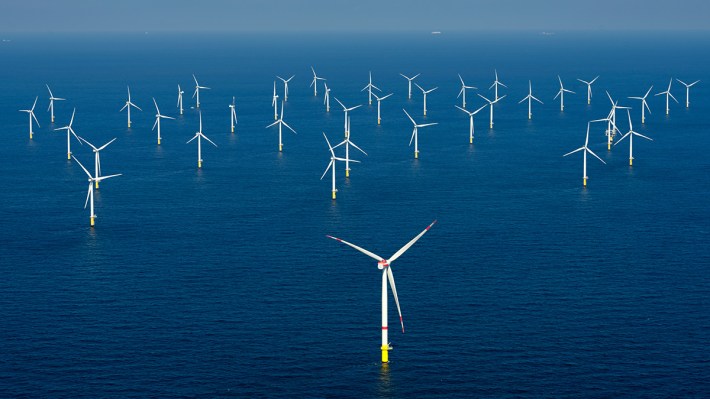
Furthermore, as global energy systems become more interconnected, these decision-making tools could be applied in Canada’s offshore wind sector. With vast coastlines in the Atlantic and Pacific, Canada stands to benefit from structured, data-driven planning in its transition to a low-carbon future.
Moving forwards
The study provides a significant step forward in building the best offshore wind projects through multi-factor decision-making tools. By leveraging MAVT, hybrid MCDA approaches, and cutting-edge software like DECERNS, Norway is paving the way for more efficient, sustainable, and socially responsible offshore wind development. As other nations seek to expand their renewable energy capabilities, these methodologies could prove invaluable in ensuring a balanced and forward-thinking approach to offshore wind power expansion.
Source
Assessing the sustainability of offshore platform power supply alternatives
using Multi-Criteria Decision Analysis (MCDA): A case study of Norway, Science of The Total Environment, 2025-04-10
 Boˆreal