
The Netherlands is taking bold steps to establish itself as Europe’s hydrogen hub, with a national hydrogen network being developed to fuel a more sustainable future. This ambitious project not only leverages the country’s existing natural gas infrastructure but also connects industries, storage facilities, and neighbouring nations, setting a global example for a clean energy transition.
What is the National Hydrogen Network?
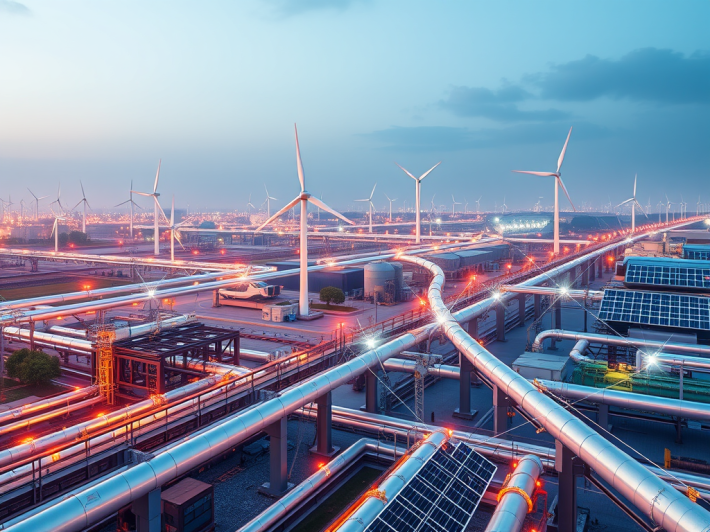
The National Hydrogen Network, spearheaded by Gasunie through its subsidiary Hynetwork, is a 1,200-kilometre system of hydrogen pipelines. It will connect five major industrial clusters in the Netherlands—centres where industries are concentrated—to hydrogen storage, import hubs, and international networks with Belgium and Germany.
- The project will repurpose existing natural gas pipelines, making it faster, cheaper, and less disruptive.
- By reusing infrastructure, the cost of conversion is just 20% of building entirely new pipelines.
This network is the backbone of the country’s plan to decarbonise industry, accelerate the green hydrogen market, and ensure energy security in a post-natural-gas world.
Why is Hydrogen Crucial for the Netherlands?
- Sustainability for Industry: The industrial sector accounts for about 25% of the Netherlands’ CO₂ emissions. While electrification is possible for some processes, heavy industries like chemicals and steel rely on high-temperature energy and hydrogen as a feedstock. Green hydrogen—produced using renewable electricity—offers a carbon-neutral solution.
- Energy Storage and Security: Hydrogen can store surplus renewable energy (like wind and solar) for use when needed, balancing the grid and ensuring energy security.
- Geographical Advantage: The Netherlands’ ports, such as Rotterdam, serve as gateways to Europe. With storage facilities like Zuidwending’s salt caverns, the Netherlands can become a hub for hydrogen production, transport, and trade.
The Roll-Out Plan: Progress and Delays
The first hydrogen pipelines are already under construction. The network will be delivered in phases:
- 2026: Rotterdam will begin operations as the first hub for hydrogen transport.
- 2030: Networks in the coastal industrial clusters, including connections to Germany and Belgium, will be completed. Hydrogen storage in Zuidwending will also come online.
- 2033: The final connections between industrial regions will be in place, including the Delta Rhine Corridor, a critical pipeline from Rotterdam to Boxtel.
While initial plans targeted 2030 for full completion, delays have emerged due to:
- Permitting Processes: New environmental laws and greater citizen involvement mean longer approval times.
- Labour Shortages: Skilled workers, contractors, and engineers are in short supply across Europe.
Despite setbacks, the Dutch government and Gasunie are collaborating to fast-track parts of the network, ensuring it remains a priority for national and European climate goals.
Connecting Regions, Reducing Emissions
In addition to the major clusters, the network will support smaller industrial players—known as the “sixth cluster”—enabling businesses outside major hubs to decarbonise.
A successful pilot project in Zeeland already demonstrates the network’s potential:
- Dow and Yara, two industrial giants, exchange hydrogen via repurposed gas pipelines, achieving:
- CO₂ reductions of 20,000–40,000 tonnes annually—equivalent to the heat demand of a small city.
- 80% reduction in road transport for hydrogen delivery.
- Lower energy consumption, saving 0.15 PJ (petajoules) per year, comparable to the gas usage of 3,000 households, or the energy from 42 gigawatt-hours (GWh) of electricity.
These results underscore the practical benefits of hydrogen networks for emissions reductions and efficient energy use.
Hydrogen and Safety: Overcoming Challenges
A key concern surrounding hydrogen infrastructure is safety, particularly the risk of hydrogen embrittlement—where hydrogen atoms weaken steel pipelines. Gasunie has addressed these challenges through rigorous testing and safety measures:
- Pipelines are inspected, monitored, and retrofitted to handle hydrogen safely.
- Pressure management systems and hydrogen storage in salt caverns will minimise fluctuations, reducing stress on infrastructure.
- Gasunie has years of experience operating a hydrogen pipeline in Zeeland, proving the system’s safety and reliability.
The Benefits: A Cleaner, Stronger Economy
- Decarbonising Industry: Hydrogen enables industries to phase out fossil fuels, reducing emissions and future-proofing operations.
- Boosting Energy Resilience: By storing and distributing green hydrogen, the network strengthens the country’s energy independence.
- Economic Growth: The hydrogen network will create new opportunities for trade, innovation, and jobs, positioning the Netherlands as the leading hydrogen hub for North-Western Europe.
A European Vision, Led by the Netherlands
The Netherlands is not acting alone. International collaboration with Germany and Belgium ensures hydrogen flows seamlessly across borders, creating a shared energy market that benefits the entire region. By leveraging its geographical strengths, existing infrastructure, and industrial expertise, the Netherlands is laying the groundwork for a European hydrogen economy.
A Look Ahead
While the road to completion has faced delays, the vision remains clear: a connected, clean, and resilient hydrogen-powered future. The National Hydrogen Network represents more than just pipelines—it is the lifeline of a sustainable, decarbonised economy that balances industrial progress with environmental responsibility.
With construction already underway, the Netherlands is proving that bold investments and collaborative action can drive real change, setting a benchmark for countries around the world striving for a greener tomorrow.
More information: Overview PDF {Dutch}, Ministerie van Infrastructuur en waterstaat
Sources
- Interview: National Hydrogen Network Roll-Out Plan Updated, Fuel Cells Works, 2024-12-16
- Interview: National hydrogen network roll-out plan updated, Gasunie, 2024-12-16
- Converting the gas grid to hydrogen, is it really that simple?, Gasunie, 2024-12-16
- Hydrogen through natural gas pipelines: safe and sustainable, Gasunie
- Hydrogen network Netherlands, Gasunie
- Market consultation hydrogen backbone, Gasunie
- Gasunie starts construction of national hydrogen network in the Netherlands, Gasunie, 2022-06-29
- Gasunie hydrogen pipeline from Dow to Yara brought into operation, Gasunie, 2018-11-27
- Green Deal: hydrogen transport via Gasunie gas network makes industry in Zeeuws-Vlaanderen stronger and more sustainable, Gasunie, 2016-03-14
- Waterstof voor de regio, Impuls, Zeeland Sports, Provincie Zeeland, Ministerie van Economische Zaken
 Boˆreal