
Solar power is one of the most promising solutions for a sustainable future, and ongoing innovations in solar cell technology are pushing the boundaries of efficiency and environmental responsibility. A recent study from the Shanghai University of Electric Power [31.05°N, 121.8°E] focuses on perovskite solar cells (PSCs) — a type of solar technology with immense potential. By eliminating the electron transport layer (ETL), researchers have devised a design that significantly improves efficiency while addressing some of the environmental concerns of traditional solar cells.
Why Perovskite Solar Cells?
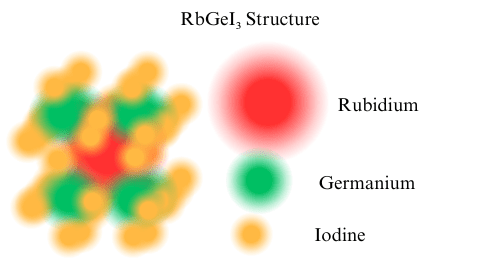
PSCs are highly efficient and cost-effective, with some designs achieving power conversion efficiencies of over 30%. However, they traditionally use lead-based materials, raising environmental concerns. This study introduces a lead-free germanium-based perovskite, RbGeI3, which is stable, efficient, and environmentally friendly.
The Breakthrough: ETL-Free Design
In a standard PSC, the electron transport layer (ETL) facilitates the movement of electrons but can also increase energy losses due to recombination and defects. By eliminating this layer, the researchers:
- Reduced Recombination: The absence of an ETL minimises carrier recombination, improving efficiency.
- Enhanced Stability: The simplified structure enhances mechanical and thermal stability, crucial for long-term performance.
- Improved Efficiency: With optimised layer thickness and material properties, the new design achieves a convention-beating power conversion efficiency of 27.4%.
How It Works
- Optimised Layer Thickness:
- The thickness of the perovskite layer was fine-tuned to improve charge transport while minimising defects.
- Built-In Electric Field:
- The design leverages a natural electric field within the cell to drive electron movement, compensating for the absence of an ETL.
- Advanced Materials:
- RbGeI3 exhibits high light absorption and mechanical stability, making it ideal for sustainable solar technology.
Implications for Solar Energy
- Scalable and Sustainable:
- Lead-free perovskite cells address the environmental challenges of traditional PSCs, making them safer for large-scale deployment.
- Higher Efficiency with Fewer Resources:
- Eliminating the ETL simplifies manufacturing and reduces costs, paving the way for affordable solar energy.
- Applications Across Regions:
- The stability and efficiency of RbGeI3-based PSCs make them adaptable to various climates, from sunny deserts to temperate regions.
A Brighter Solar Future
This innovation highlights the potential of solar energy to meet global energy demands sustainably. For individuals and communities, these advancements mean cleaner, more reliable energy at lower costs.
By embracing such breakthroughs, we edge closer to a future where solar power is not just a renewable option but a cornerstone of sustainable living.
Source
Optimization Study of Perovskite Solar Cells with ETL-Free Structure Based on DFT and SCAPS, SSRN, 2024-12-14
 Boˆreal