
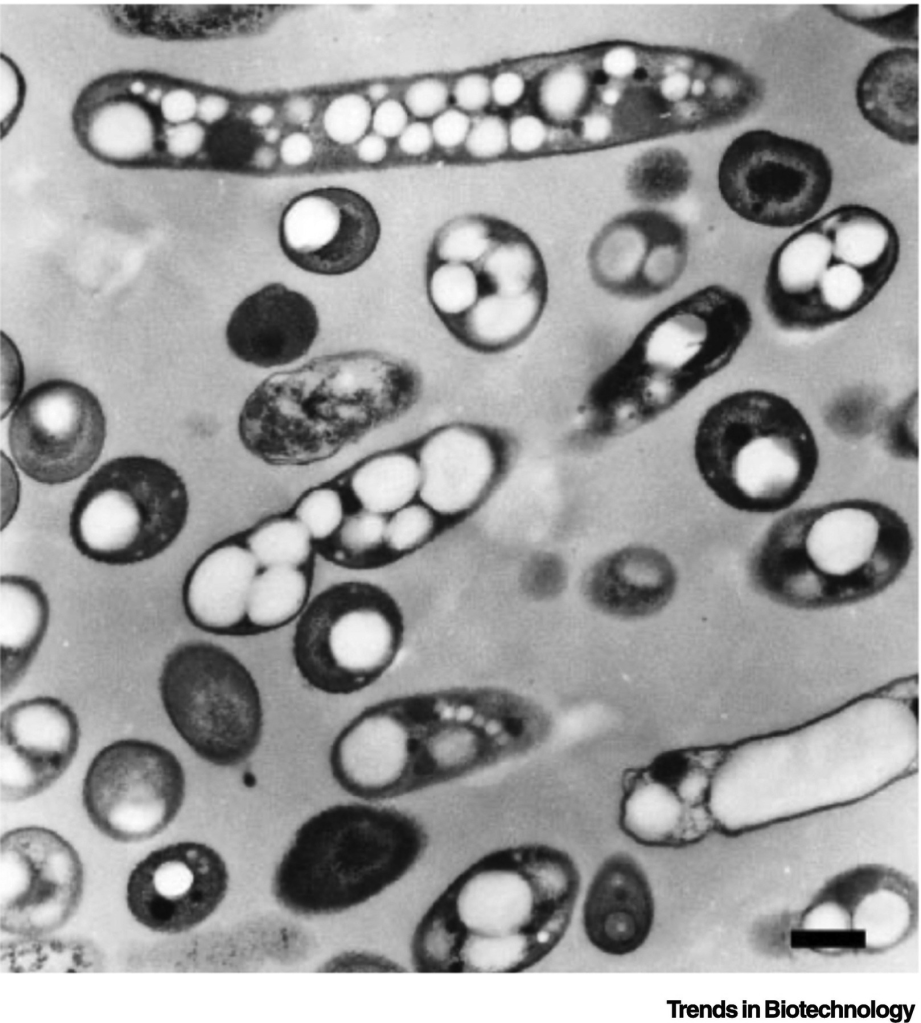
A new biotechnological breakthrough has harnessed renewable hydrogen to produce xylitol, a popular sugar alternative. In this study, scientists modified Cupriavidus necator (right), a hydrogen-oxidising bacterium, to convert D-xylose (a natural sugar in biomass) into xylitol by using hydrogen as an energy source. This new method is set to be greener and more cost-effective than traditional xylitol production, which requires resource-intensive chemical processes.
Why Hydrogen?
Hydrogen stands out as an efficient, carbon-free energy carrier, making it an ideal candidate for sustainable biocatalysis. By using hydrogen as a clean electron donor, this method avoids the high carbon and energy costs of traditional approaches, which rely on sacrificial organic compounds to recycle essential cofactors.
The Innovation: Engineering Bacteria to Reduce Sugars
The research team equipped Cupriavidus necator with an enzyme from another microorganism, allowing it to reduce D-xylose to xylitol with remarkable efficiency. The hydrogen-driven system achieved over 90% energy efficiency, turning nearly all the energy from hydrogen into the conversion of xylose. This impressive efficiency could scale up to other sugar alcohols like L-arabitol and D-ribitol, widening its industrial applications.
Real-World Potential: Greener Production with Economic Benefits
Not only does this hydrogen-driven process lower the environmental footprint of xylitol production, but it also offers a blueprint for creating other biobased products sustainably. By sidestepping carbon-heavy cofactor recycling processes, this method could pave the way for greener production in the food and biochemical industries.
This research highlights hydrogen’s potential beyond energy storage, making it a versatile ally in sustainable production systems. With continued development, hydrogen-powered biocatalysis could transform how we produce everything from sweeteners to specialty chemicals.
Source
H2-driven xylitol production in Cupriavidus necator H16, BioRxiv, 2024-10-25
 Boˆreal