
In a groundbreaking experiment, researchers from the Department of Energy’s Pacific Northwest National Laboratory (PNNL) have achieved a remarkable milestone in flow battery technology.
Incorporating a dissolved simple sugar called β-cyclodextrin hugely boosted capacity and longevity, making it the first laboratory-scale flow battery experiment to report more than a year of continuous use with minimal loss of capacity. This achievement represents a significant step towards revolutionizing energy storage solutions for the electrical grid.
Large-scale energy storage is vital for ensuring a stable electrical grid, especially as renewable energy sources like wind, solar, and hydroelectric power play a more prominent role in electricity generation. Flow batteries offer a promising solution to store energy until it’s needed, but existing commercial facilities rely on mined minerals like vanadium, which are costly and challenging to obtain. To establish a sustainable approach, researchers are seeking alternative technologies that use more common and easily synthesized materials, such as the innovative β-cyclodextrin additive.
What is β-cyclodextrin and how does it help?
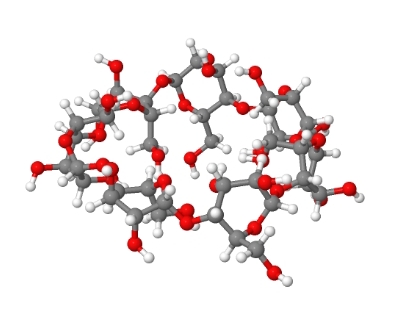
The research team at PNNL experimented with β-cyclodextrin, a derivative of starch found in common food and medicine additives. They optimized the chemical ratios in the system until it achieved a remarkable 60 percent increase in peak power. This sugar-based additive not only extended the battery’s capacity and longevity but also speeded up the electrochemical reaction through homogeneous catalysis. Unlike previous solid additives, β-cyclodextrin works effectively while dissolved in the liquid electrolyte, eliminating the risk of solids dislodging and fouling the system.The research builds upon a PNNL-patented flow battery design, demonstrating that β-cyclodextrin can significantly improve the process. The researchers believe this breakthrough has made the battery design a candidate for scaling up, paving the way for large-scale grid energy storage facilities. Additionally, the team is exploring other similar compounds to further enhance the system’s performance.
Valuable scientific progress invariably requires collaboration. The successful development of this next-generation flow battery design required the expertise of many scientists from PNNL and Yale University. Their efforts resulted in a patent application for the innovative battery design. The study received support from the DOE Office of Electricity and the Energy Storage Program, demonstrating the importance of public investment in advancing clean and sustainable energy technologies. The recent breakthrough in flow battery technology, fueled by the addition of β-cyclodextrin, marks a significant milestone in the quest for efficient and sustainable energy storage solutions. With its capacity for continuous charge and discharge over more than a year, the next-generation flow battery paves the way for more resilient electrical grids, relying on renewable energy sources to power our future. As researchers continue to refine and scale up this innovative design, the vision of large-scale grid storage facilities becomes increasingly attainable, offering hope for a greener and more sustainable energy future.
Source
Proton-regulated alcohol oxidation for high-capacity ketone-based flow battery anolyte, Joule (Cell), 2023-07-06
 Boˆreal