
Hydrogen is gaining attention as a versatile energy carrier that can play a crucial role in the transition to a sustainable energy future. It offers a clean and efficient solution for electricity generation. There’s also a great deal of reference to “blue” and “green” hydrogen, so let’s clarify those terms and how their implications for a greener energy landscape.
Blue hydrogen is produced through a process called steam methane reforming, which involves converting natural gas into hydrogen and capturing the resulting carbon emissions. The captured carbon is then stored or used, preventing it from being released into the atmosphere. This process makes blue hydrogen a low-carbon alternative to traditional fossil fuels.
To generate electricity using blue hydrogen, the hydrogen gas can be used in a variety of ways. One common method is through hydrogen fuel cells, which produce electricity by combining hydrogen and oxygen, with water being the only byproduct. Fuel cells are highly efficient and can be used to power various applications, such as vehicles, buildings, and even entire electricity grids. Additionally, blue hydrogen can be used in gas turbines to generate electricity. These turbines combust hydrogen and produce high-temperature and high-pressure gases, which drive a turbine connected to a generator. This process converts the chemical energy of hydrogen into electrical energy.

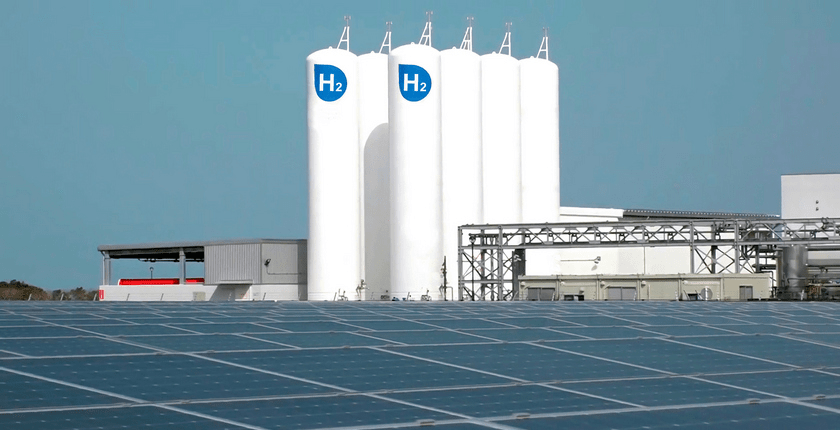
Green hydrogen is produced through a process called electrolysis, where this is powered by renewable electricity, to split water molecules into hydrogen and oxygen. This method produces hydrogen without any carbon emissions, making it a truly clean and sustainable energy option.
Similar to blue hydrogen, green hydrogen can be utilised in fuel cells and gas turbines for electricity generation. The electricity produced by renewable sources is used to power the electrolysis process, creating a closed-loop system that enables renewable energy to be stored and used when needed. This flexibility enhances grid stability and supports the integration of intermittent renewable energy sources.
Comparing Blue and Green
Blue hydrogen offers a transitional solution as it leverages existing natural gas infrastructure while reducing carbon emissions. However, it still relies on fossil fuel feedstocks and requires carbon capture and storage technologies to achieve its low-carbon status.
On the other hand, green hydrogen represents a fully renewable and sustainable option. It relies solely on renewable energy sources, mitigating carbon emissions throughout the entire production process. As renewable energy costs continue to decline, the scalability and widespread adoption of green hydrogen become more feasible.
In conclusion, hydrogen, whether in the form of blue or green, holds great promise for electricity generation in a decarbonised future. Both types offer cleaner alternatives to conventional fossil fuel-based power generation methods, contributing to reduced greenhouse gas emissions. As renewable energy capacity expands, the utilisation of green hydrogen is expected to increase, driving the transition to a sustainable and resilient energy system.
Now Read
 Boˆreal