
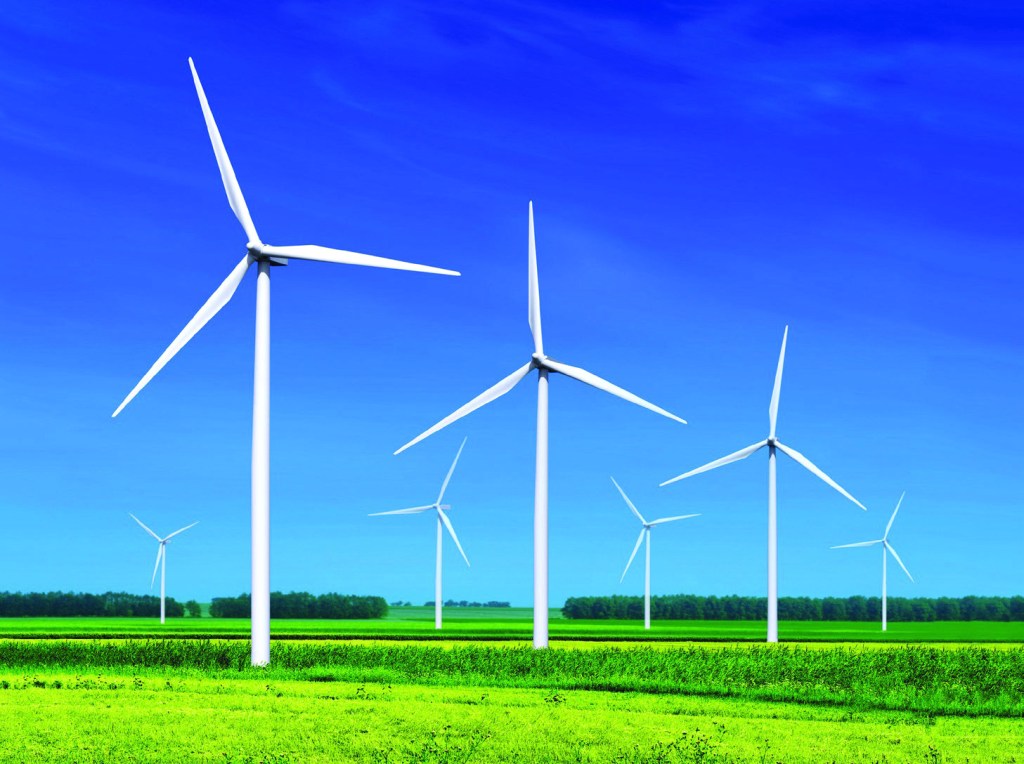
How wind turbines generate electricity:
- Wind turbines consist of large rotor blades, often mounted on a tall tower. When the wind blows, it causes the rotor blades to rotate.
- As the rotor blades spin, they harness the kinetic energy of the wind. The energy in the moving air particles is transferred to the rotor blades.
- The spinning rotor blades are connected to a main shaft inside the turbine. As the blades rotate, they turn the shaft, which in turn spins a generator.
- The generator is the core component responsible for converting mechanical energy into electrical energy. It consists of a rotor and a stator. The spinning shaft causes the rotor inside the generator to rotate, creating a magnetic field.
- The rotating magnetic field of the rotor induces an electrical current in the stationary stator. This process, known as electromagnetic induction, relies on Faraday’s law of electromagnetic induction.
- The electrical current produced in the stator is in the form of alternating current (AC). AC is the type of electricity commonly used in power grids.
- Before the electricity can be sent to the power grid or used locally, it undergoes power conditioning. This involves converting the AC power to a higher voltage and adjusting its frequency and other parameters to match the requirements of the electrical grid.
- The conditioned electricity is transmitted through power lines and integrated into the electrical grid. It can then be distributed to homes, businesses, and other consumers, providing a source of clean, renewable energy.
Now read
Harnessing the Wind: Tracing the Evolution of Wind Power Development
Collaboration boosts wind generator output
 Boˆreal