
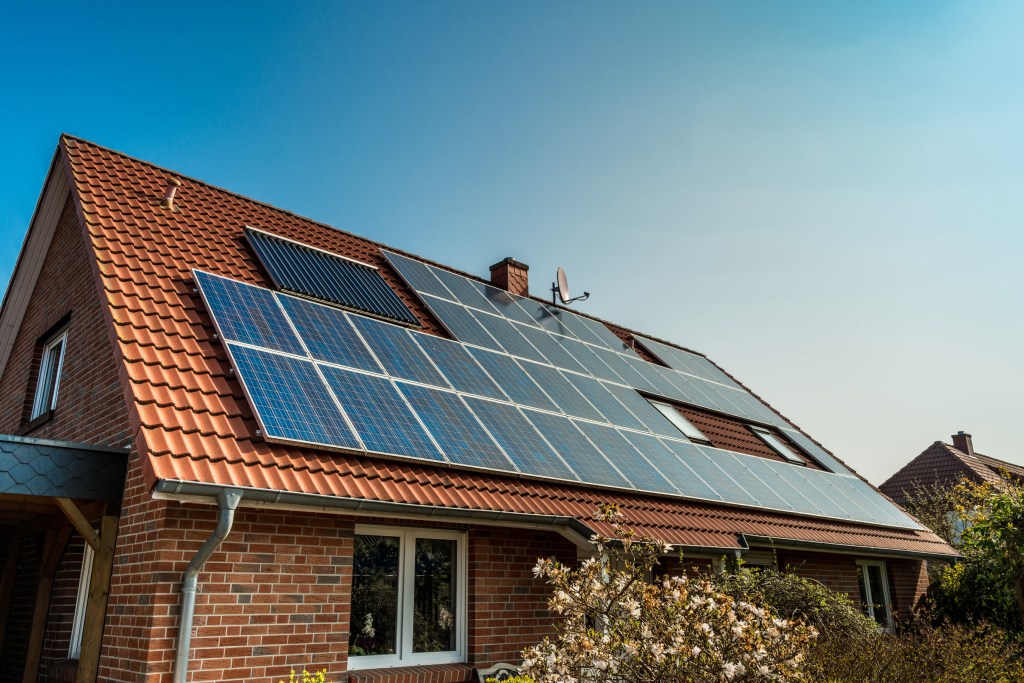
How solar photovoltaics (PV) technology generates electricity from sunlight:
- Solar panels, also known as photovoltaic modules, are composed of multiple solar cells, typically made of silicon. Each solar cell contains two layers of semiconducting material, usually doped with impurities to create a positive and negative charge.
- When sunlight hits the solar panels, the solar cells within the panels absorb the photons, which are tiny packets of energy, due to the unique properties of the semiconducting material, which allows electrons to be freed from their atoms and creates an electric current.
- Once the solar cells absorb the photons, the energy is transferred to the electrons within the semiconducting material. This energy causes the electrons to become excited and move from the lower energy level (valence band) to the higher energy level (conduction band).
- The semiconducting material in the solar cells has a built-in electric field. This electric field helps to separate the excited electrons from the positively charged “holes” left behind in the valence band. The electric field directs the electrons towards one side of the solar cell, while the holes move towards the opposite side.
- As the separated electrons and holes move to their respective sides, they create a flow of electric charges, resulting in a direct current (DC). This flow of electrons constitutes the generation of electricity. Multiple solar cells are connected in series within the solar panels to produce higher voltages.
- Since most household appliances and the power grid operate on alternating current (AC), the generated DC electricity from the solar panels needs to be converted. An inverter is used to convert the DC electricity into AC electricity, suitable for powering homes, businesses, and feeding back into the electrical grid.
- The converted AC electricity can be used immediately to power appliances and devices within the building where the solar PV system is installed. Any excess electricity can be fed back into the electrical grid through a process called net metering. This allows the user to receive credits or financial compensation for the surplus electricity they contribute.
N.B. While solar power typically refers to photovoltaic (PV) technology, concentrated solar power focuses sunlight onto a small area using mirrors or lenses. The concentrated heat is then used to generate steam, which drives turbines and produces electricity.
Now Read
Comparing Solar Technologies
The Development of Solar Power
Costs and returns of investing in solar power
Building-Integrated Solar Photovoltaics
 Boˆreal